An Easy Way to Discuss Worldviews at the Dinner Table

Cup of WaterDoes the challenge of teaching a “Christian Worldview” to your children, leave you feeling a little intimidated? If so, you’re not alone. I think most of us trying to parent from a biblical perspective feel the pressure of an increasingly vocal culture. I recently had occasion to talk to some students about the subject and part of it included a simple object lesson you may want to try at home.

Step 1: Take a clear glass and pour a random amount of water in it.
Step 2: Ask everyone to guess how many ounces of water are in the glass.
Step 3: After answers are given, talk about the value of opinions (and how even though some of the group may be older and more experienced in life, it’s still a guess)
Step 4: Ask, “How can we truly determine the amount of water in the glass?” (Answer: Have a measuring cup ready to pour the water into)
Step 5: After measuring and determining the actual amount, the guesses will prove to be close, right, or way off.

Application: As a Christian, we must measure various opinions daily against a standard; not our own, but the Bible. Consider this quote from Dr. D. James Kennedy,

“When a person makes up his own ethical code,

he always makes up an ethical system which he thinks he has kept.”

We must remember that “right” and “wrong” is defined by God. Simply put, what matches His character (as revealed in the Bible) is “right” and what doesn’t is “wrong”. That may sound trite, but we can unintentionally pick only those things in the Bible “we’ve kept” to add into our ethical code while skipping over what we haven’t. And just to be clear, it’s not an exercise in legalism, but one to illustrate God as the sole Person to define morality and acceptable behavior. Even in this enlightened age, He’s not lowered His standard, but graciously offers us a way to reach it…in Christ.

“For in Him dwells all the fullness of the Godhead bodily; and you are complete in Him…” – Colossians 2:9-10a

Posted in Christian Life | Tagged , , , , , , , , , | 2 Comments

Def Leppard Almost Got it Right

Back-in-the-day I was a “Hair Band” kind of guy. Of course, in the 80s a lot of us were cranking up the metal, but one song (even then) perplexed me; Def Leppard’s “Rock of Ages”. No, it wasn’t the strange four-word count down at the beginning; the problem was that while liking the sound, I knew in my heart the title words had deeper meaning. Years later, I heard the back-story of how the band found a hymn book in the studio (opened to “Rock of Ages”) and it prompted the lyrics for their song…makes sense, uh, I guess.

As the years have passed, the rock tune has faded for me, but the hymn has remained (funny how childhood memories show back up). At the time we were singing it in church, I never realized it would stay with me. Lately I’ve been reminded of the powerful words and it’s a shame that the rock tune will be belted out in arenas all over the world this year, but the crowds won’t hear about the real Rock…Christ (1 Cor. 10:4).

Perhaps you would like to refresh your memory with the words from the original “Rock of Ages”. If so, here they are (and they’re great even without pyrotechnics or light show):

(1) “Rock of Ages, cleft for me, let me hide myself in Thee;

Let the water and the blood, from Thy [wounded] side which flowed,

Be of sin the double cure, cleanse me from its guilt and pow’r.

(2) Not the labors of my hands can fulfill Thy law’s demands;

Could my zeal no respite know, could my tears forever flow,

All for sin could not atone; Thou must save and Thou alone.

(3) Nothing in my hands I bring, simply to Thy cross I cling;

Naked come to Thee for dress, helpless look to Thee for grace;

Foul I to the fountain fly, wash me Savior or I die!

(4) While I draw this fleeting breathe, when my eyes shall close in death,

When I soar to worlds unknown, See Thee on Thy judgment throne,

Rock of Ages, cleft for me, Let me hide Myself in Thee.”

 – Augustus Toplady 1740-1778

Posted in Christian Life | Tagged , , , , , , , , , | 2 Comments

Should Christians “Go Green”?

RecycleOk, before you think the cheese has totally “slid off my cracker” and I’ve become a “sandal-wearing-tree-hugger”; you need to know this post comes from wrestling with a tough biblical truth recently. It’s something simple that many Christians would quickly agree with, but then live a lifestyle denying it. Here it is, are you ready? The Bible says, “God owns everything.” (Psalm 24:1, 1 Cor. 10:26). Now you’re probably thinking, “Well duh! I learned that while finger-painting in Sunday School”. So, here’s the question, “As grown-ups, what does that mean for us?”

It means we’re created and charged with being good stewards of all God has made (Genesis 1:28, 2:15). You see stewardship is a key truth in scripture. From the Hebrews representing God’s truth to the world and Jesus’ stories regarding good and bad managers, to Paul’s commitment to share the Gospel; you can see it’s a lot bigger than choosing an “earth-friendly” yogurt container. It’s a mindset recognizing God as sovereign over this place we call home and having a spirit of gratitude for all He’s given. As a matter of fact, Jesus said God is mindful of everything, even a small bird in the sky (Matthew 10:29-31).

So what do we do? Become activist and try to “save the earth” from “evil capitalism?” Of course not, the Earth doesn’t need saving and capitalism isn’t the enemy, but we need to consult the owner on a regular basis. This is an incredible world God has made and continues to sustain for us. Since the God of the Bible is the Creator; we should acknowledge His instructions concerning the physical world, the people in it, and our attitude toward generosity. I can’t tell you specifically what that means for you, but I know it involves an eye to appreciate God’s handiwork…which is a masterpiece!

Now if you’ll excuse me, I need to go out and recover my recycle bin from where the dude chunked it this morning after pick-up.

Posted in Christian Life | Tagged , , , , , , , , , | 2 Comments

A Golden Nugget to Pass Along

My inbox reminds me of a certain space on our kitchen counter where things appear “out of nowhere”. However, today one of the many emails was a golden nugget from Chuck Swindoll. It came via his blog to pastors, but even though it’s written to ministers, it’s very applicable to all believers. It was a great reminder to pause and evaluate my attitude. Perhaps you would like to do the same. Consider this excerpt:

__________________________

“My maternal granddad was the most influential adult in my life as I grew up. One day he said to me, “I want to explain something to you.” And he used a big word I had never heard before: erosion. The bank that dropped off into the bay was continually being eaten away by the pounding waves and rainy weather. We walked over near the edge, and he measured a certain distance from that point to where the bank dropped off down to the water. He drove a stake into the ground. “You’re going to be here next summer,” he told me, “and we’ll measure this again then.”…

No one I’ve worked with in ministry who has fallen morally sat on the side of his bed one morning and thought, Let’s see, now, how can I ruin my life? How can I implode my reputation? Erosion doesn’t happen like that. It is always silent; it is always slow; it is always subtle. But its final blow is always severe.”

__________________________

Chuck then goes on to mention Paul’s words, “Let him who thinks he stands take heed that he does not fall” –
1 Corinthians 10:12

Every day is a good day to evaluate what’s influencing our thinking because the consequences of anger, bitterness, pride, greed, and lust may have different roots, but the fruit is always the same…loss. May we prayerfully stay ahead of the erosion, and stand firm on the solid ground of God’s daily renewal (Romans 12:1-2).

– You can find the complete original post from Chuck Swindoll by clicking here

Posted in Christian Life | Tagged , , , , , , , , , , , , , | Leave a comment

You Are Special…So Act Like It

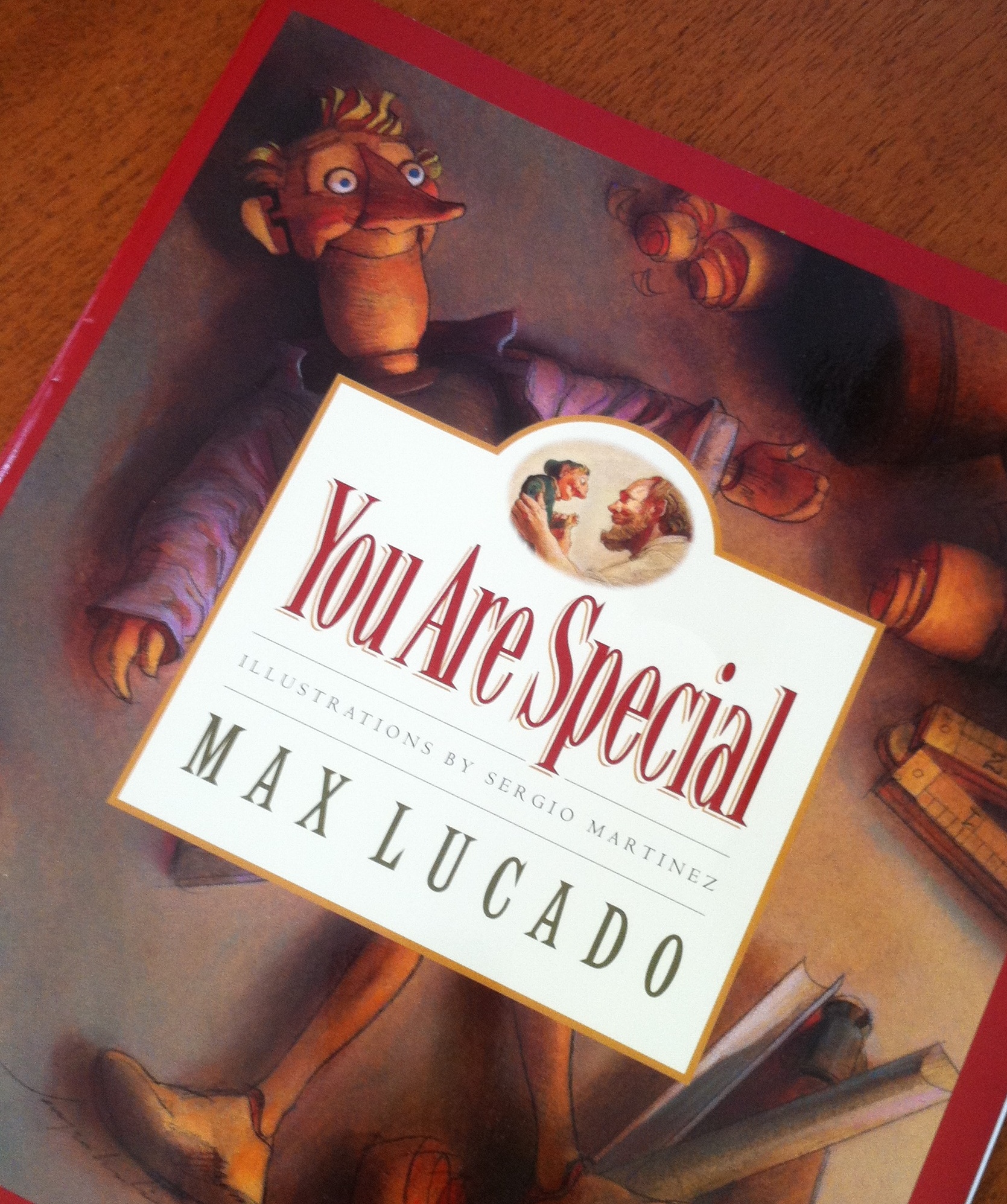
You are Special coverThis week I’m reminded of the book “You are Special” by Max Lucado. It’s a timeless classic and one of my favorites. In it, we follow the journey of a Wemmick named Punchinello (Wemmicks are small wooden people carved by Eli). With the help of Lucia, Punchinello discovers that peer-acceptance is a ridiculous pursuit, and that Eli’s approval is what really matters.

Over the years, I’ve thought of Punchinello many times. Similar to his friends (giving stars and dots for approval/disapproval), our society also ranks people. From personal pursuits to “Like” buttons and “followers”, we can spend a lot of energy cultivating approval. Even in church work, an image can be sought more than the actual ministry we’re called to. So at the end of the day, what makes one special? Is it a skill-set, appearance, or intellect? Perhaps, it’s the general likeability of one’s demeanor? Actually, it’s none of those.

We humans are special because we’re made in God’s image (Genesis 1:26-27) with an eternal soul as He forms us (Psalm 139:13). Even the people I would rather avoid are made in His image, and Jesus came to offer new life to all who will trust in Him. The Bible says:

“…God demonstrates His own love toward us, in that while we were still sinners, Christ died for us.” -Romans 5:8 NKJV

So what should a daily “special” life look like? It’s:

  • Remembering that God’s opinion matters more than anyone’s
  • Looking to scripture for the definition of valuable pursuits
  • Praying and seeking for the right mindset each day (Rom. 12:1-2)
  • Teaching our children to seek God’s approval before peer-acceptance
  • Helping others find their true worth in Christ
  • Treating people with respect and grace as Jesus did
  • Recognizing the unborn, the infirmed, and the elderly as having innate worth

Like it was with Punchinello, peer-pressure can be tough; but when it’s all said and done, their opinions aren’t what will matter…it’s His that will.

Posted in Christian Life | Tagged , , , , , , , , , , | Leave a comment

Can God Make a Rock He Can’t Move?

You’ve probably heard the classic question, “Can God make a rock so big He can’t move it?” Yeah, I know it’s a silly notion, but I’ve been pondering it lately in a different way. Regarding His power, “What would God’s wrath look like totally unleashed?” The answer may surprise you, because it has been. No, I’m not meaning the Flood, the fire on Sodom, or other times God made adjustments. It was when His wrath poured out in full measure…on Jesus. At this point you may say, “Oh yeah, I knew that.” If so, stop and really think about it.

For 3 excruciating hours (in total darkness during the middle of the day), Jesus was separated from the Father, to endure God’s wrath on sin…our sin. Isaiah 53 says He was crushed, bruised, scorned and despised in our stead. When we talk about being redeemed, it was a painful transaction, because sin costs…a lot. Over the past few weeks (in preparation for teaching), there are several subjects I’ve had to revisit; things like God’s character, human suffering, and why there is a place called hell. And to be honest, I’ve had to repent for taking Jesus’ sacrifice for granted, and for not being more broken for those who don’t know Him.

So, regarding the question, “Yes, there’s an immovable rock and His name is Jesus.” May we never take sin lightly, and may we never forget His grace.

“For God so loved the world that He gave His only begotten Son, that whoever believes in Him should not perish, but have everlasting life.” -John 3:16 NKJV

Posted in Christian Life | Tagged , , , , , , , , , , , , | 4 Comments

The Professor’s Dead and I’m Bummed about It

The ProfessorRussell Johnson aka “The Professor” from Gilligan’s Island is dead…and I’m a little bummed about it. Not because I’m a huge fan, but because of what his passing represents. When I was growing up, Gilligan was a daily presence on “after-school” TV and more than once I got sidetracked (from homework) watching the Professor build cool contraptions from elements “indigenous to the island” as he would say.

Reading his story reminded me of something you may not know. Before he was ‘The Professor”, Mr. Johnson was a World War II bomber crewman, decorated Lieutenant, and was shot down over the Pacific. In his day, it was not uncommon for actors to be veterans…not exactly the case now. Some of my favorite actors over the years were WWII veterans like Jimmy Stewart, and they reminded me of the older men I loved to hear tell stories when I was a kid. Their legacy is one of courage, commitment, hard work, decency, and patriotism.

Dawn Wells aka “Mary Anne” (and yes, better looking than Ginger, in case anyone is still debating it) tweeted that he was “a true gentleman, a good father and a great friend”. The “Greatest Generation” is quickly passing and I hope we do them justice by carrying on the best parts of their legacy. Thanks Professor for your service and the can-do spirit your on-screen persona gave to every boy trying to build “cool stuff” out of junk…you’ll be missed!

Posted in Uncategorized | Tagged , , | Leave a comment

Lasting Influence

It’s been said that, “Leadership is Influence”. John Maxwell is most often credited with the quote, but it’s an old truth; one history reveals in powerful stories of success and failure. As I thought and prayed through the end/beginning of the year, there’s a scripture passage still on my mind. It’s where Paul explains his approach to influencing the people God entrusted to him. Take a look:

“When I came to you, brothers, announcing the testimony of God to you, I did not come with brilliance of speech or wisdom. For I didn’t think it was a good idea to know anything among you except Jesus Christ and Him crucified. I came to you in weakness, in fear, and in much trembling. My speech and my proclamation were not with persuasive words of wisdom, but with a powerful demonstration by the Spirit, so that your faith might not be based on men’s wisdom, but on God’s power.” – I Corinthians 2:1-5 HCSB

Think about it. Here was a man very capable and experienced in leadership, but:

  • He didn’t rely on excellence of speech
  • He was determined to focus only on Christ and Him crucified
  • He went in weakness, fear and trembling
  • He wasn’t dependent on persuasive words of wisdom
  • He wanted their faith to be specifically in God’s power.

In other words, Paul didn’t want them to have great faith in him, but in God. We should always do things with excellence (Col. 3:23) but here’s what I’m asking myself,

“What is the lasting effect of my leadership, and

what is the true nature of my influence?”

My prayer is to somehow “get over myself” and effectively point people to the power of Christ in their life. In reality, it may mean speaking less, or speaking more (depending on circumstances). It may involve less reliance on strategy and more on God, and for me, I’m quite certain it means more prayer. How about you?

Posted in Christian Life | Tagged , , , , , , , , , , , | Leave a comment

Life after Christmas

I’ve been thinking about Mary and Joseph “the-day-after”. The whole scene at the manger has always intrigued me, what with total strangers showing up to celebrate, only to leave and tell everyone in town about it. So what about the days after? Well, Matthew tells us they presented Jesus for circumcision (as the Law required) and then went on their way. Think about what came next when they got “back to the house”; cleaning up, Joseph catching up at work, diaper changing, 2am feedings, all the stuff we call “life”. Except for some interesting guys showing up from the East, life was normal. I mean here they were nurturing God Himself in the flesh and life was just, well, boring. There were no shepherds knocking on the door, the wise men were heading back home and the neighbors were still gossiping about the timeline of marriage vs. Jesus’ birth. Here’s what I’m learning from it:

  • God’s plan was at work while they did the “regular stuff” – As they got home and settled in, the Wise Men were on their journey (unlike most nativity scenes they came to the house, not the stable-Matt. 2). Perhaps along with the obvious of glorifying God by their visit, the expensive gifts provided funds for the not-yet-planned journey to Egypt (Matt. 2). Isn’t that just like God to have things working for our good without us even knowing? (Romans 8:28)
  • Their testimony was faithfulness not fame – From everything we read in the Gospels, Joseph and Mary were identified for their faithful hearts, not skill-sets and that’s what they went back to…a quiet life of faithfulness. In a day when people of all descriptions are placed on pedestals, it’s easy to miss the powerful value of a heart that’s faithful to the Lord. From Jesus’ teaching, to Paul’s letters and the Revelation, we see an emphasis on faithfulness.

So as we move-on from the joy of Christmas Day, back to the “normal” stuff, think about Mary and Joseph. Let’s take the excitement of the time and let it fuel us into the New Year as we carry joy to the world!

Posted in Christian Life | Tagged , , , , , , , , , , , , | Leave a comment

Does it Really Matter? The Essentials: Part 4-Who is Jesus?

Asking “Who is Jesus?” on the street in most cities would rarely produce a clear consensus. No other name in history equals His influence, but there are still various opinions of Christ. It’s interesting how little that’s changed in 2,000 years. The crowds following Jesus didn’t have a clear answer either. Asking them the same question would probably have gone something like this:

“Uh, excuse me sir, who do you think this teacher named Jesus is?” “Well, I’m not really sure, but people are saying He’s some kind of new prophet or something. Some even describe seeing miracles, but I think they’re exaggerating.”

As a matter of fact, the scripture demonstrates it:

13When Jesus came into the region of Caesarea Philippi, He asked His disciples, saying, “Who do men say that I, the Son of Man, am?” 14So they said, “Some say John the Baptist, some Elijah, and others Jeremiah or one of the prophets.” 15He said to them, “But who do you say that I am?” 16Simon Peter answered and said, “You are the Christ, the Son of the living God.” 17Jesus answered and said to him, “Blessed are you, Simon Bar-Jonah, for flesh and blood has not revealed this to you, but My Father who is in heaven.” – Matthew 16:13-17 NKJV

Everyone around Palestine was forming opinions. From political savior to back-from-the-dead prophet; public sentiment varied and was subject to change (remember how the crowd went from shouting “Hosanna!” to “Crucify Him!” within a week’s time?). So, who is Jesus…really? Let’s consider:

I. Jesus as Historical – Is there evidence for Christ other than the Bible? Yes, there are actually other historical sources referencing Him.

  • Roman Sources-Tacitus (Roman Historian), Suetonius (Secretary to Emperor Hadrian), Pliny the Younger (Roman Administrator), Emperor Trajan, and Emperor Hadrian all mention Christ directly and/or His followers.
  • Jewish Sources-Talmudic writings describe Jesus of Nazareth’s ministry and how it led to execution. Historian Flavius Josephus’ specifically mentions Jesus.

II. Jesus as Divine – Was He really God?

  • The Bible clearly declares in John 1:1-5 that Jesus was part of the Godhead (Trinity) before creation, active in creation, and here in the flesh ministering.
  • Jesus claimed He was Messiah (John 4:26, 5:39), claimed He was God (John 10:30, 14:9), claimed only He had the power over His life (John 10:17-18), and even went so far as to reference Himself by the personal holy name of God (John 8:58).

III. Jesus as Human – Was He really Human?

  • The Bible describes Jesus being conceived by the power of the Holy Spirit, and born after a natural 9 month time period. He even had to grow up (Luke 2:52), alongside siblings.
  • Physically – He experienced hunger, thirst, fatigue, etc.
  • Emotionally – He experienced sorrow, anxiety, separation, anger, etc.
  • Death – His actual death was confirmed by a spear in the heart (John 19:34)
  • Resurrection – Back to life with a literal body (Luke 24:42-43)
  • Witnesses – His body was seen by many first hand witnesses (I Corinthians 15:3-7)

IV. Jesus as Savior

  • Redemption – John the Baptizer describes Jesus as “the Lamb of God who takes away the sin of the world” (John 1:29-34). In that statement, the Old Testament promises of a Deliverer are displayed and Jesus begins His ministry.
  • Exclusive – In John 14:6 Jesus says He is the ONLY way to God. His statement is clear, concise, and without room for interpretational gymnastics. Based on Jesus’ words, there are no other options for salvation outside of faith in Him.
  • Grace – Forgiveness of sin and freedom are available through Jesus (Romans 8:1-2)
  • Reigning – Hebrews 1:1-3 tells us that He is sitting beside the Father now reigning as King.
  • Advocate – Jesus is our go-between with the Father, and we can turn to Him in our time of need (I John 2:1-3)
  • Returning – Revelation 19:11-16 describes a returning King taking care of business. The name He wears is KING OF KINGS AND LORD OF LORDS and all will know He is God.

V. The Question

So, who is Jesus to you? I pray that you know Him in a real way today. If not, I encourage you to acknowledge Him in prayer, confess Him as Lord, ask Him to take charge of your life, and He will change you forever!

Posted in Christian Life | Tagged , , , , , , , , , , , | Leave a comment

Have We Lost the Battle?

Last week in Munich, Germany I had the opportunity to work with some great folks who are tirelessly trying to reach their city with the Good News of Jesus. It’s a tough environment in many ways and what the experts call a “Post-Christian” context (with only 2% of the population being born-again believers). At one point, we climbed to the top of a tower to pray over the city. As I looked out over the beautiful spires of grand, once-filled-now-empty cathedrals, a sinking question hit me; “Have we lost the battle?” I wish I could say I had a great faith-filled moment where all seemed right in the world, but I just felt grieved.

Over the next few days as we worked and prayed, I was led to a passage of scripture as I thought about another question, “How do we win?” The answer came through words written long ago to people who probably wondered the same things, and I want to share them. For the record, we haven’t lost the battle, it’s being won every day one-life-at-a-time; but as we plan, pray, and partner, here are some powerful words to keep us on track:

3 “For by the grace given to me, I tell everyone among you not to think of himself more highly than he should think. Instead, think sensibly, as God has distributed a measure of faith to each one. Now as we have many parts in one body, and all the parts do not have the same function, in the same way we who are many are one body in Christ and individually members of one another. According to the grace given to us, we have different gifts:

If prophecy, use it according to the standard of one’s faith;
if service, in service; if teaching, in teaching; if exhorting, in exhortation;
giving, with generosity; leading, with diligence; showing mercy, with cheerfulness.

Love must be without hypocrisy. Detest evil; cling to what is good. 10 Show family affection to one another with brotherly love. Outdo one another in showing honor. 11 Do not lack diligence; be fervent in spirit; serve the Lord. 12 Rejoice in hope; be patient in affliction; be persistent in prayer. 13 Share with the saints in their needs; pursue hospitality. 14 Bless those who persecute you; bless and do not curse. 15 Rejoice with those who rejoice; weep with those who weep. 16 Be in agreement with one another. Do not be proud; instead, associate with the humble. Do not be wise in your own estimation. 17 Do not repay anyone evil for evil. Try to do what is honorable in everyone’s eyes. 18 If possible, on your part, live at peace with everyone. 19 Friends, do not avenge yourselves; instead, leave room for His wrath. For it is written:

“Vengeance belongs to Me; I will repay, says the Lord.”

20 But if your enemy is hungry, feed him. If he is thirsty, give him something to drink. For in so doing you will be heaping fiery coals on his head. 21 Do not be conquered by evil, but conquer evil with good.” –Romans 12:3-21 HCSB

Posted in Christian Life | Tagged , , , , , , , , , , , | 1 Comment

Is Thanksgiving Going Away?

So let me get this straight, “Black Friday” has been replaced by “Brown Thursday”? With stores opening as early as 6:00am on Thanksgiving Day, I guess Granny will have some empty seats at the table this year (since blenders are half-price). As one who once worked in retail, I really feel for the workers giving up their family time.

Here’s the deal, I love Thanksgiving. It’s one of my favorite holidays for a lot of reasons (a big one being great food of course). But in all seriousness, it saddens me to think that the main idea of the holiday is being sacrificed on the “door-buster-sale” altar. So, to the question, “Is Thanksgiving going away?” No, not as long as there are those of us who’ll commit to gathering for the purpose of giving thanks to our Great God for His wonderful blessings. And in that spirit, here are a few reminders about the first Thanksgiving celebration to get us started: 

  • In 1620, there were 102 people who spent 65 difficult days at sea coming to the New World to begin new lives.
  • Before leaving the ship, they created a revolutionary document called the “Mayflower Compact”.
  • Their first winter was especially brutal and claimed the lives of 58 of them, with only a few healthy enough at any time to care for the sick and bury the dead.
  • The next autumn (1621), the remaining 44 gathered with new Native American friends and specifically thanked God for His provision. 

Consider this quote attributed to one of them, “It is not with us as with other men, whom small things can discourage.” Wow, small things? Now those are some folks worth recognizing while enjoying the turkey and dressing. 

In case you would like to refresh your memory, here are the words of the Mayflower Compact. It’s brief, but bold. Their sacrifice paved the way for us and I’m thankful for those who committed themselves to such a challenge. God has blessed us greatly as a nation and I pray we’ll continue to thank Him for it. 

“IN THE NAME OF GOD, AMEN. We, whose names are underwritten, the Loyal Subjects of our dread Sovereign Lord King James, by the Grace of God, of Great Britain, France, and Ireland, King, Defender of the Faith, &c. Having undertaken for the Glory of God, and Advancement of the Christian Faith, and the Honour of our King and Country, a Voyage to plant the first Colony in the northern Parts of Virginia; Do by these Presents, solemnly and mutually, in the Presence of God and one another, covenant and combine ourselves together into a civil Body Politick, for our better Ordering and Preservation, and Furtherance of the Ends aforesaid: And by Virtue hereof do enact, constitute, and frame, such just and equal Laws, Ordinances, Acts, Constitutions, and Officers, from time to time, as shall be thought most meet and convenient for the general Good of the Colony; unto which we promise all due Submission and Obedience.  

IN WITNESS whereof we have hereunto subscribed our names at Cape-Cod the eleventh of November, in the Reign of our Sovereign Lord King James, of England, France, and Ireland, the eighteenth, and of Scotland the fifty-fourth, Anno Domini; 1620.”

Posted in Christian Life | Tagged , , , , , , , , , , , | Leave a comment

Does it Really Matter? The Essentials: Part 3-Who’s the Boss?

For the record, there’s much to appreciate about the modern era. Things like indoor plumbing, electricity, and advanced medical care have enhanced our quality of life; but have we progressed as humans? Some would say yes by pointing out efforts to fight hunger or new attitudes about tolerance and peace. On the surface, there appears to be a compelling argument for human progress, but how much have we really learned? Are lasting solutions as simple as the much suggested “…leaders sitting down, talking to each other and solving the problems”?

To get some perspective, let’s consider the first recorded “challenge” to mankind after the flood.

I. The First Global Summit

Genesis 11:1-9 states that everyone had the same speech and were concerned with a specific threat of being scattered abroad over the face of the earth. Why? Well, Genesis 9:1 says God had given a directive to fill the earth and even placed a “fear and dread” on the animal life ahead of the peoples’ migration (v.2). Now, considering the long life spans of Noah and his sons after the flood, there would’ve been “firsthand” knowledge of God’s previous interaction with man as they went forth. For example:  

  • The need for repopulation was a direct result of earlier generations’ rebellion toward God.
  • God fulfilled his covenant to save Noah, his family, and the land animals.
  • God was to be worshiped, praised, and served as modeled by Noah.

So what did they do? Did they reconsider and follow God’s instructions? No, they got together, talked it over and made an agreement.

 II. The First Treaty

The people rejected God’s command and chose a different path. Their idea was a grand “public works project” to build a city on the plains of Shinar (Babylon) with a tower reaching the heavens. Why? Well the Bible describes in verse 4 that they wanted to “make a name for themselves”. Of course, there is nothing inherently wrong with building a city and a tower, but their motive was the issue.

It would be a monument to them…as humans. The construction of something so large, generations would know they had taken charge of their destiny and defined their own reality. Hmmm, that’s starting to sound very familiar…even contemporary.

 III. Modern Towers

Currently there are several “towers” under construction in the public arena; such as the climate change industry, a push to redefine personal rights, and various global treaties (to solve every objectionable human behavior under the sun). It all sounds “cutting edge”, but is actually rooted in ancient attitudes. As a matter of fact, you can hear the echoes of the serpent’s voice in Genesis 3:5 “you will be like God” and for the most part, you can describe it in a single word-humanism.

With the Enlightenment and Greek philosophy as a resource, Roy Wood Sellars wrote the first Humanist Manifesto in 1933. It stated core beliefs through 15 affirmations. Some of the points; the universe is “self-exiting and not created”, a “continuous process” is man’s origin (evolution), “old attitudes of prayer and worship” are to be replaced with a “heightened sense of personal life”, a “cooperative effort to promote social well-being” should be established, and a “socialized and cooperative economic order” needs to replace the inadequate “profit motivated society” (capitalism).

Consider how they’ve shown up in various institutions over the last 80 years, like the education field, political/legal forums, media circles, and social organizations. It’s not a conspiracy so-to-speak, but something larger, deeper, and fundamentally rebellious…it’s the “call of the tower”. For a quick overview of Secular Humanism click this link:

http://www.gotquestions.org/secular-humanism.html 

So, as we live in a culture trumpeting beliefs like “tolerance is supreme”, “conviction is narrow-minded”, and “man is progressing”, let’s learn from the story by considering God’s response. 

IV. God’s Intervention

  • He accomplished His purpose in spite of their disobedience. By changing their language, He “scattered them over the face of the earth” Genesis 11:8-9.
  • We see Proverbs 19:21 in action. It says, “There are many plans in a man’s heart, nevertheless the Lord’s counsel-that will stand.”
  • A permanent reminder was left from Babel that’s still with us today. The languages of the world are a testimony of God’s seriousness concerning His commands and His involvement in the world. 

V. Conclusion

So what should we do while here in the shadows of modern towers? We should articulate the truth by pointing out the basic principles in scripture. The Bible gives us a clear lens on history, while also putting man’s grandiose plans in perspective. We should be engaged in taking action against problems of our day, but remember, our most basic need is for a Savior. In the Bible, Babylon is a symbol of the world system marked by “babbling”, but a clear word of truth spoken in love may just be the language someone’s been waiting to hear.

Posted in Christian Life | Tagged , , , , , , , , , | 1 Comment

Five Things I Learned as a Soldier

Like most Veterans, I’m occasionally asked about the “military experience” and I’m always amazed at how fresh the memories can be when prompted. Today on Veteran’s Day, I’ve been “prompted”, but instead of old stories, I want to mention 5 life-lessons I value every day that I learned in the Army (other than a love for coffee and weaponry).

1. My limits are usually farther than I think: It’s incredible how much more you can do physically and mentally when needed. Drill instructors helped me to learn that there’s usually “one more mile left” when I think there isn’t.

2. An appreciation for people of various backgrounds: Throughout my enlistment, most of my close friends were of different ethnicities and regions. As a guy coming from a small town, I had a lot to learn, but quickly grew to appreciate the things we had in common, like family stories, personal interests and laughter.

3. There’s a difference between rank and respect: A title or position may come with privilege and authority, but the personal respect of peers and subordinates can only be earned.

4. A “Drive-on” mindset: When the plan breaks down, or the equipment fails, there’s great value in having an “adapt-and-over-come” mentality. Whether it takes Duct Tape, a big hammer, or an alternate route, sometimes we just need to keep “driving on” (and always carry a Swiss Army knife).

5. The strength of Christ in me: Upon arrival at Boot Camp, it was very obvious that I wasn’t at home anymore, but God was faithful every single day. He empowered me in ways I didn’t even know existed and He still does – “I can do all things through Christ who strengthens me.” –Philippians 4:13

Thanks to all of you who have served our great nation – Happy Veterans Day!

Posted in Christian Life | Tagged , , , , , | 4 Comments

Does it Really Matter? The Essentials: Part 2-The Flood

Did some guys actually build a massive boat for themselves (and animals) to escape a huge flood? If so, is it relevant now? Let’s take a look: 

The flood described in Genesis is the most sweeping physical event in history. Many of our natural resources and topography can be directly traced to it. It’s an important part of the Biblical narrative, and for our purpose in this post, I want to consider two questions. 

Was it a literal global flood?  

  • Genesis chapters 6-9 tells the story with specific details, such as vessel specifications, dates, timeframe, water height, limiting of animal categories to “kinds”, occupants, food provisions, Noah’s age, sources of the water, and resulting after-effects.
  • If the flood was literal, then we should expect to find evidence on the earth’s surface. The geological record points to a rapidly developed, catastrophic event, which disturbed and re-deposited materials all over the earth (instead of long slow deposits over “millions of years”). For example: 
    1. The Fountains of the Great Deep – In Genesis 7:11 God broke up (literally “ripped apart”) the fountains of the great deep. This sudden global release of a subterranean layer of water would have exploded with incredible heat and pressure. This alone would deliver massive cataclysmic destruction at the points of origin, on the earth’s surface, and final ground elevations. This is exactly what we see with the Mid-Atlantic Ridge, the Ring of Fire, mountain ranges from surface compression, and faults from plate subduction. Here are two links for more details:

http://www.answersingenesis.org/articles/nab/catastrophic-plate-tectonics  

http://www.answersingenesis.org/home/area/tools/flood-waters.asp

    1. When the water began receding in Genesis chapter 8, it revealed the devastation of the flood. Today we see an abundance of formations which support a mountain-covering-worldwide-flood. For example, fossils of sea creatures high above sea level, rapid burial of plant and animal life, quickly deposited layers of sediment, and much more. One of the more interesting is evidence of two additional Great Lakes left afterwards in the American southwest where Utah, Colorado, Arizona and New Mexico come together. These two vast bodies of water (breached later at their southwestern edge) could have quickly and easily eroded the Grand Canyon. Here are two links for more details:

http://www.answersingenesis.org/articles/am/v2/n4/geologic-evidences-part-one

http://www.answersingenesis.org/articles/wog/grand-canyon 

What difference does the Flood story make now? 

  • Mankind’s sin grieves God’s heart (Genesis 6:6) and has always been a serious issue. It brings God’s wrath, and the flood is referenced in the New Testament as an example (Luke 17:26-30 & II Peter 3:1-13).
  • God is gracious. Gen. 6:8 says, “Noah found grace in the eyes of the LORD.” Noah’s deliverance was based on God showing Him “unmerited favor” along with his family.
  • God honored His covenants (with Noah and his family-Gen. 6:18) & (with Himself to never flood the Earth again-Gen. 8:21-22). God always keeps his promises…to the letter.
  • Worship is important. Noah’s first recorded act after leaving the ark was to build an altar and worship (Gen. 8:20).
  • Noah’s faith is a key part of the story, not just ancillary. (He acted on faith and respect for the Lord-Hebrews 11:7). Building the ark took time, and considering the extreme depravity of the culture, following God’s instructions would have brought much ridicule.
  • Rebellion against God is our ongoing core problem (Gen. 6:5 & 8:21). The story starts and ends with God commenting on the condition of hearts. We cannot change ourselves, only He can do that.
  • God’s Word is not just “kind-of-true” or “mostly true”, it’s specifically true.
  • Just as Noah was delivered by God’s grace, we are offered an opportunity to be delivered from sin’s judgment through Christ. He has already suffered the penalty of God’s wrath for us. His redemptive work on the cross provides a way to be saved and have a personal relationship with Him (Rom. 5:1-2, 5:8, 6:23, 8:1). 

The story of Noah and the great flood is often viewed as a children’s lesson, but it’s so much more. It’s a sobering and compelling account of God’s love and provision while evil is dealt with. It’s that same love that invites us to trust Him with our life now by placing our faith in Jesus. I hope you have. If not, I pray that you will. What a story…what a truth! 

Posted in Christian Life | Tagged , , , , , , , , , , , | 2 Comments

Does it Really Matter? The Essentials: Part 1-Creation

Ever felt uncertain about the Bible’s validity compared to modern science or philosophy? Maybe you consider stories of “creation-in-6-days” or a “global-flood-and-a-boat” to be more mythical than true? I think most of us have wondered how it all fits together. There are a few of the subjects I call “The Essentials”. In the next few posts, I would like to share some thoughts about them. Let’s start at the beginning: 

Part 1 – Creation

Genesis 1:1, John 1:3, Col. 1:16, and Ex. 20:11 all clearly state that God created the earth. So, did God create everything in six literal days? Let’s break it down into three sections:

A. Science vs. The Bible

In 1896 Cornell University president Andrew Dickson White published a book titled A History of the Warfare of Science with Theology in Christendom. 1 The book launched the idea that science and Christianity were mutually exclusive. Since then the idea has taken root, but consider some of these facts:

  • Prominent scientist of history perfected their methods based on the belief that God created “with order”. Men like Galileo, Pascal, Newton, and Pasteur believed God’s work could be studied, observed, and understood. Consider this quote from Johannes Kepler in his book Astronomia Nova De Motibus, “The chief aim of all investigations of the external world should be to discover the rational order which has been imposed on it by God, and which he reveals to us in the language of mathematics.”
  • Galileo’s mistreatment by the Roman Catholic Church during the inquisition has been used as evidence of conflict between science and Christianity. However, Galileo’s work actually affirms his commitment to scripture instead of church leaders. His study of the earth in orbit revealed God’s design of the solar system, and its magnificence.
  • A 1996 university survey revealed that 40 percent of scientists believe, not simply in God, but in a personal God who answers prayer. 2
  • It’s been said that science doesn’t support a global flood as described in the Bible. However, there is overwhelming evidence of such an occurrence, and many formations can only be explained by the flood in Genesis (we’ll address that more in Part 2).

B. Young Earth vs. Old Earth

When the Darwinian Theory gained popularity in the late 19th century, theologians were caught off guard. The “evidence” of an extremely old earth caused many to formulate new doctrines in attempts to reconcile Genesis with contemporary ideas. Unfortunately, even renowned scholars of that day reinterpreted scripture to reflect these views. There are 3 major alternatives (or compromises) coming out of that era:    

Theistic Evolution – belief that God created the basic parts and let natural selection take over, therefore guiding the evolutionary process.

  • This contradicts the very core of evolutionary teaching that no single source is behind the process, thus “Theistic Evolution” is an oxymoron.
  • The Bible teaches that death specifically came to earth through Adam’s sin (Rom. 5:12, I Corinthians 15:21). The idea of millions of years of natural selection before Adam doesn’t fit with scripture. 3

The Gap Theory – belief in a long gap of time between Genesis 1:1 and 1:2 allowing for “millions of years”. This idea comes specifically from Thomas Chalmers of the 19th century, and was unfortunately popularized by the notes in C.I. Scofield’s study Bible. 3

While it’s an intriguing idea, it doesn’t fit the context of the Hebrew. The official Hebrew Bible-The TANAKH (our Old Testament), interprets Gen. 1:1 this way, “When God began to create heaven and earth.” As you can see, it’s declarative and simply sets up verse 2 with no pause. It doesn’t describe two separate events.

The Day/Age Theory – belief that the 6 days in Genesis chapters 1 & 2 represent ages of time, not literal days. The idea is that for some reason, creation was a long drawn out event over millions of years, and God simply stepped in on occasion to move it forward to the next age.

  • The Hebrew word for “day” in the Creation story is “yom”. It is consistently used in scripture to mean a literal day, and the specific mention of “morning” and “evening” leaves no room for an alternative.
  • The creation order is also problematic. On the 3rd day, God created vegetation (grass, herbs, trees, etc.). The sun doesn’t appear until day 4. If day 3 was an era of time, how could vegetation survive with no sun?

In addition to these reasons, experiments measuring things like element depletion, continental erosion, lunar dust, and more show the earth to be young, not millions of years old. 4

C. Evolution

A general belief that man has a common evolutionary ancestry with apes, and other animals

  • The difference between Macroevolution and Microevolution is a key component concerning the overall theory. Macroevolution is defined as: The appearance of new traits that the ancestral population neither had nor possessed the genetic information that is required to produce them (a fish becoming a bird) 3, this part of the theory is directly opposed to the biblical record. There is no evidence for it, and has never been observed. Microevolution is defined as: The changes in the percentages of a population that have a particular trait, which is basically adaptation. 3 This idea is clearly true, and observable. A bacteria becoming resistant to antibiotics, or height/weight of a people group changing makes sense. There is room for variations from dog breeding, but dogs don’t become cats.
  • The Fossil Record – Much has been made over the years of so-called transitional humans. The iconic images of Lucy, Neanderthal, and others, when put to the test reveal ape skeletons, or worse, such as fraud. Also too, with the modern volume of cutting into the earth, there should be massive amounts of transitional fossils, but that isn’t the case.

So, does it really matter? Let’s think about it this way. If Genesis is true, then Jehovah God (The God of the Hebrews) is revealed specifically as the Originator of the universe. Creation not only started specifically with Him, but must yield to His specific authority too. The Bible describes it all coming full-circle one day when everyone will see God as uniquely sovereign, but the Good News is; He invites us to know Him personally through His son Jesus Christ. I sincerely hope you’ve placed your trust in Christ. If not, I pray you’ll consider doing so today.

“The heavens declare the glory of God, and the sky proclaims the work of His hands. Day after day they pour out speech; night after night they communicate knowledge.” – Psalm 19:1-2 HCSB

Next Post: Part 2-The Flood

Notes:

1. Who Made God? – Ravi Zacharias & Norman Geisler (p. 49)

2. Beyond Opinion – Ravi Zacharias (p.109)

3. The Popular Encyclopedia of Apologetics – Ed Hinson & Ergun Caner

4. In the Beginning – Walt Brown

Posted in Christian Life | Tagged , , , , , , , , , , , | 2 Comments

A Quote Worth Passing Along

I hear and see a lot of quotes, but one really grabbed me recently. I heard it on the radio in an old sermon by Adrian Rogers. He was talking about the value of truth and trusting God’s Word as a compass. I’ve been pondering on it ever since. Here it is:

“He who is slave to the compass, is master of the ocean; the rest must sail close to the shore.” – Author Unknown

In a time when western Christianity is heavily influenced by cultural norms, those of us following Christ must hold specifically to the revealed truth in the Bible as our compass. As a believer, I need to learn and do what it says in all of the roles I’m in…as husband, as dad, and in my vocation. There’s nothing like reading the Bible for yourself, and hearing from the Lord. The real truth liberates and you may even find some fresh “wind in your sails”!

“…If you abide in My word, you are my discpiles indeed. And you shall know the truth, and the truth shall make you free.” – John 8:31b-32 NKJV

Posted in Christian Life | Tagged , , , , , , , , , , | 1 Comment

Caught Red-Handed

Once in a small village, there was an orphan (about 10 years old). One morning, as he quietly walked through the busy market crowd, he took a small loaf of bread. When the owner of the cart saw it, he grabbed the boy and rushed him directly to the nearby constable for punishment.

While the merchant made his complaint, an ornate carriage came along with the King inside. Noticing the boy being held by the shirt, the King instructed a soldier to investigate. When he reported back, the King’s heart was filled with compassion; so he gave the order for the young man to be placed in his household, given a new name and raised as one of his sons.

Can you imagine the overwhelming joy of being escorted into the castle for the first time? Now there was a nice room to live in, new clothes to wear and plenty of fine food to enjoy every day.

Consider Paul’s words in Colossians 1:13-14:

“He has delivered us from the power of darkness and conveyed us into the kingdom of the Son of His love, in whom we have redemption through His blood, the forgiveness of sins.” -NKJV

Now consider the passage again, but in a personal way by replacing the “us & we” with “me & I”.

“He has delivered me from the power of darkness and conveyed me into the kingdom of the Son of His love, in whom I have redemption through His blood, the forgiveness of sins.”

Like the orphan, when we place our trust in Christ as savior, we too are rescued, forgiven and placed in the King’s household. What an incredible gift! Because of His grace, we now bear His name with full rights and privileges as His children! Now that’s something to be thankful for and worth sharing with others!

Posted in Christian Life | Tagged , , , , , , , , , | Leave a comment

Work & Rest: 2 Helpful Questions for Finding Balance

Is your candle burning at both ends and melting in the middle too? I think a lot of us would have to say yes (at least sometimes). Truth is, balancing work and rest in our modern environment is challenging. A simple list of “dos & don’ts” to clean it all up would be nice, but real life isn’t like that. So, instead of a list, I have a couple of questions to offer. They’re based on some recent discussions in our small group.

Question #1

“Are the things I do (work, vocation, position) defining me, or am I properly defining what I do based on who I am in Christ?”

Consider Paul’s charge in Colossians 3:23:

“And whatever you do, do it heartily, as to the Lord.”

It helps me to remember whose approval I should really be seeking. Paul had experienced great success in the inner circle of Jerusalem “movers & shakers”, but after conversion gained a new perspective on how to invest His life (Philippians ch. 3). He continued his trade as one working hard with his hands making tents (Acts 18:3), but his objectives and influence in the marketplace changed. Instead of trying to win among his peers, he modeled the attitude of laying aside hindrances to finish well “as the cloud of heavenly witnesses looked on” (Hebrews 12:1-2).

Question #2

Do I incorporate a natural rhythm of work and rest (as God modeled it by creating 6 days and resting 1) or am I mostly “On” 24/7?”

When God created the world, He set certain “rhythms” in motion; for example day & night, wake & sleep, growth & dormancy. Once, when I spent a couple of months in the woods, I actually began to sense the natural “rhythm” of the created order and it was fascinating. In the Psalms, there is a word “Selah” placed at strategic points to direct the reader (originally singers) to pause and reflect on the potency of the words. It’s a pattern worth noting and incorporating into daily life.

Finding ways to pause and reflect is incredibly valuable. Of course it looks different with everyone, but it wouldn’t surprise me if soul searching led to smart phones being silenced more, radios turned off occasionally during commutes, and Sunday afternoons less crammed with activity. Unfortunately, there is no magic answer to the problem of “busyness”, but I’m confident the Lord will provide guidance when asked.

Posted in Christian Life | Tagged , , , , , , , , , , , , , , | 2 Comments

“Hold that thought!” 3 Questions to ask before Posting

Social media is a powerful tool. Welcome or not, it’s become a common thread in the fabric of our lives and influences many. That being said, I was reminded this week of something I want to pass along. You see, there was a subject I considered writing about; but after honest reflection, I stopped because my approach failed the test. I call it the “3 Question Test” and it helps me stay on track (at least somewhat). You may want to develop your own, but here’s how it goes for me.

1. “What’s my motive?” – Am I sharing an encouraging or affirming word? Am I passing along something I’m learning? Or does the “Like” button motivate me more than I want to admit? It’s a subtle little thing, but its presence (like “retweets” and “sharing”) can influence subject, tone and content. It can even involve forgoing a post for fear of not getting “likes” and appearing foolish.

2. “Am I Whining?”– Nobody enjoys whiners. Whether it’s personal, business or spiritual, the temptation to vent frustrations can destroy credibility, friendships and opportunities to share what Christ is doing in my life. Yes, as a Christian, I should be ready to share God’s truth unapologetically, but in an authentic spirit of love (Eph. 4:15, I Peter 3:15).

3. “Do I value my opinion too much?”  -I like my own opinion (as most of us do), but it isn’t always important. Contrary to pop-culture, all opinions are not equal and certainly not always welcome. With comment boxes everywhere, we sometimes offer answers to questions not asked. When in doubt, the old saying, “silence is golden” fits well.

The Bible teaches that I’m the temple of the Holy Spirit, a part of Christ’s Body, and not my own (I Corinthians 6:19 & 12:12-27), so ultimately the goal should be to represent Christ well. To be certain, there are times for boldness, subtlety, forgiveness, humor and encouragement, but all should be in agreement with Christ’s model. My prayer is to know when the proper times are for each and simply let the rest go.

Posted in Christian Life | Tagged , , , , , , , | Leave a comment